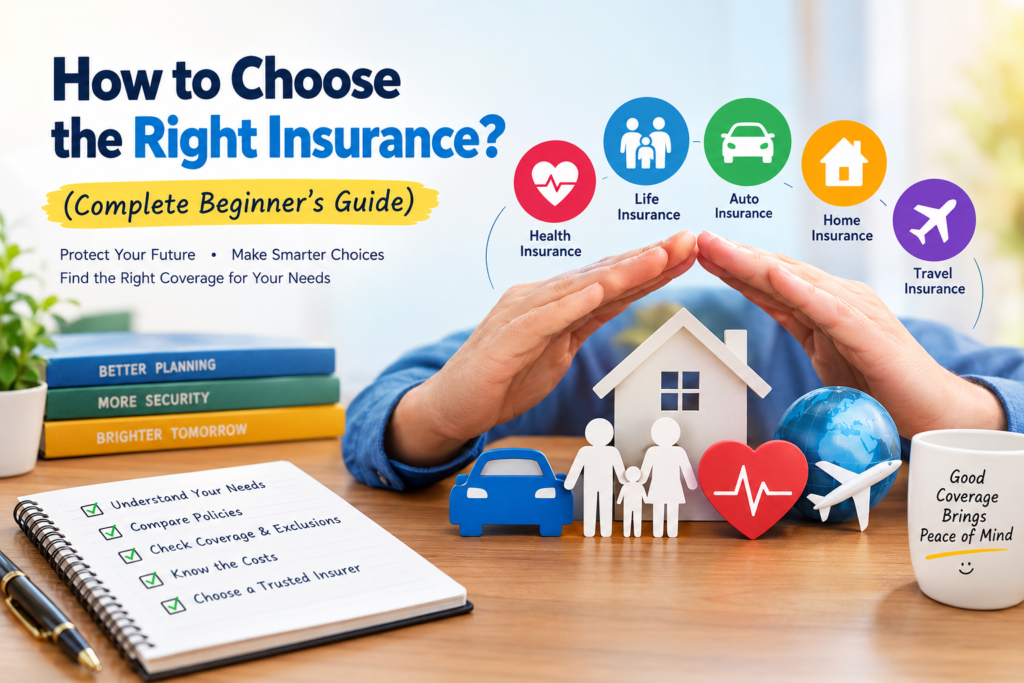

Choosing the right insurance can feel confusing, especially if you are buying insurance for the first time. There are many types of insurance, different coverage options, premiums, deductibles, exclusions, and policy terms to understand.
The good news is that choosing insurance does not have to be complicated. Once you understand what you need to protect and how insurance works, you can compare policies and make a smarter decision.
In this complete beginner’s guide, we will explain how to choose the right insurance, what factors to consider, and common mistakes to avoid.
What Is Insurance?
Insurance is a financial protection system that helps you manage unexpected costs. You pay an insurance company a certain amount of money, called a premium, and in return, the company may cover eligible losses or expenses according to the terms of your policy.
For example, if you have car insurance and your vehicle is damaged in a covered accident, the insurance company may help pay for repairs after you meet the requirements of your policy.
Insurance can protect you from large financial losses that could otherwise be difficult to afford.
Step 1: Understand What You Need to Protect
The first step in choosing insurance is understanding what you actually need to protect.
Think about your biggest financial risks. For example:
- Your health and medical expenses
- Your car or motorcycle
- Your home and belongings
- Your income
- Your family’s financial future
- Your business
- Your travel plans
Your needs will determine which type of insurance makes sense for you.
There is no single insurance policy that is perfect for everyone. A young person who rents an apartment may have very different insurance needs from a homeowner with a family.
Step 2: Choose the Right Type of Insurance
Different insurance products protect against different risks.
Health Insurance
Health insurance can help cover eligible medical expenses, such as hospitalization, treatments, tests, or other healthcare costs depending on the policy.
If medical costs are a major concern for you, health insurance may be one of the most important types of coverage to consider.
Life Insurance
Life insurance is designed to provide financial protection for your beneficiaries after your death.
It can be particularly important if other people depend on your income. The benefit may help your family manage expenses, debts, education costs, or other financial responsibilities.
Auto Insurance
Auto insurance provides protection for vehicles against certain risks, depending on the policy.
Coverage can include things such as accidents, theft, property damage, or liability. The exact protection varies by insurer and policy.
Home Insurance
Home insurance can protect your home and belongings against certain covered risks. Depending on the policy, it may also provide liability protection.
Homeowners should carefully check what is and is not covered before purchasing a policy.
Travel Insurance
Travel insurance can help protect you against certain unexpected problems during a trip. Depending on the plan, it may cover eligible medical emergencies, trip cancellations, lost baggage, or other travel-related risks.
Step 3: Determine How Much Coverage You Need
Buying the cheapest policy is not always the best choice.
You need enough coverage to protect yourself from significant financial losses.
For example, if you are choosing life insurance, consider your family’s financial needs, debts, future expenses, and income replacement requirements.
For car insurance, consider the value of your vehicle and the potential financial consequences of an accident.
For health insurance, think about potential medical expenses and the healthcare needs of the people covered by the policy.
The goal is to find a balance between adequate protection and an affordable premium.
Step 4: Compare Insurance Policies
Never assume that all insurance policies are the same.
Before buying a policy, compare several options. Look at:
- Premium
- Coverage limits
- Deductible
- Exclusions
- Benefits
- Claim process
- Policy duration
- Renewal conditions
- Additional fees
A policy with a lower premium may provide less coverage or have higher out-of-pocket costs.
Instead of comparing prices alone, compare the overall value of the policy.
Step 5: Understand the Deductible
A deductible is the amount you may have to pay yourself before the insurance company pays for a covered claim, depending on the policy.
For example, imagine a policy has a $500 deductible and you have a covered loss of $2,000. If the claim is subject to that deductible, you may be responsible for the first $500, while the insurer may cover the remaining eligible amount.
Generally, a higher deductible can mean a lower premium, while a lower deductible may result in a higher premium.
Choose a deductible that you could realistically afford if you needed to make a claim.
Step 6: Check the Exclusions
One of the most important things beginners often overlook is exclusions.
Exclusions are situations, conditions, or losses that the policy does not cover.
Do not assume that something is covered simply because you have insurance.
Before purchasing, carefully read the policy documents and ask the insurer about anything you do not understand.
Knowing what is excluded can prevent unpleasant surprises when you need to make a claim.
Step 7: Check the Insurance Company
The policy itself is important, but the insurance company also matters.
Before buying insurance, research the insurer’s reputation, customer service, financial strength, and claims process where reliable information is available.
You can also look for reviews and complaints from customers. However, remember that online reviews can be subjective, so consider multiple sources rather than relying on one review.
A slightly cheaper policy may not be worth it if the service and claims experience are significantly worse.
Step 8: Read the Policy Before Signing
Never buy insurance without understanding what you are agreeing to.
Read the policy documents carefully and pay attention to:
- What is covered
- What is not covered
- Coverage limits
- Deductibles
- Premiums
- Claim requirements
- Cancellation rules
- Renewal terms
- Waiting periods, if applicable
If a term is unclear, ask the insurance provider or a qualified professional to explain it.
Taking a little extra time before purchasing can save you from major problems later.
Common Mistakes to Avoid
Choosing Only Based on Price
The cheapest insurance policy may not provide enough protection. Focus on value rather than price alone.
Buying Too Much Coverage
At the same time, you do not want to pay for coverage you do not realistically need.
Ignoring Exclusions
Always check exclusions. They can significantly affect the usefulness of a policy.
Not Comparing Providers
Getting quotes from multiple insurers can help you understand the market and find a policy that better matches your needs.
Not Reviewing Your Insurance
Your needs can change over time. A new job, marriage, child, home, vehicle, or business can change the amount and type of insurance you need.
Review your insurance periodically and update your coverage when your circumstances change.
Final Thoughts
Choosing the right insurance is mainly about understanding your risks and finding appropriate financial protection.
Start by identifying what you need to protect. Then choose the appropriate type of insurance, determine how much coverage you need, compare different policies, and carefully review premiums, deductibles, exclusions, and coverage limits.
Remember that the cheapest policy is not automatically the best policy. The right insurance should provide useful protection at a cost you can comfortably manage.
If you are unsure about a major insurance decision, consider speaking with a qualified insurance professional who can explain the available options and help you understand the policy terms.
By taking the time to compare your options and read the details, you can make a more informed insurance decision and avoid many common beginner mistakes.